

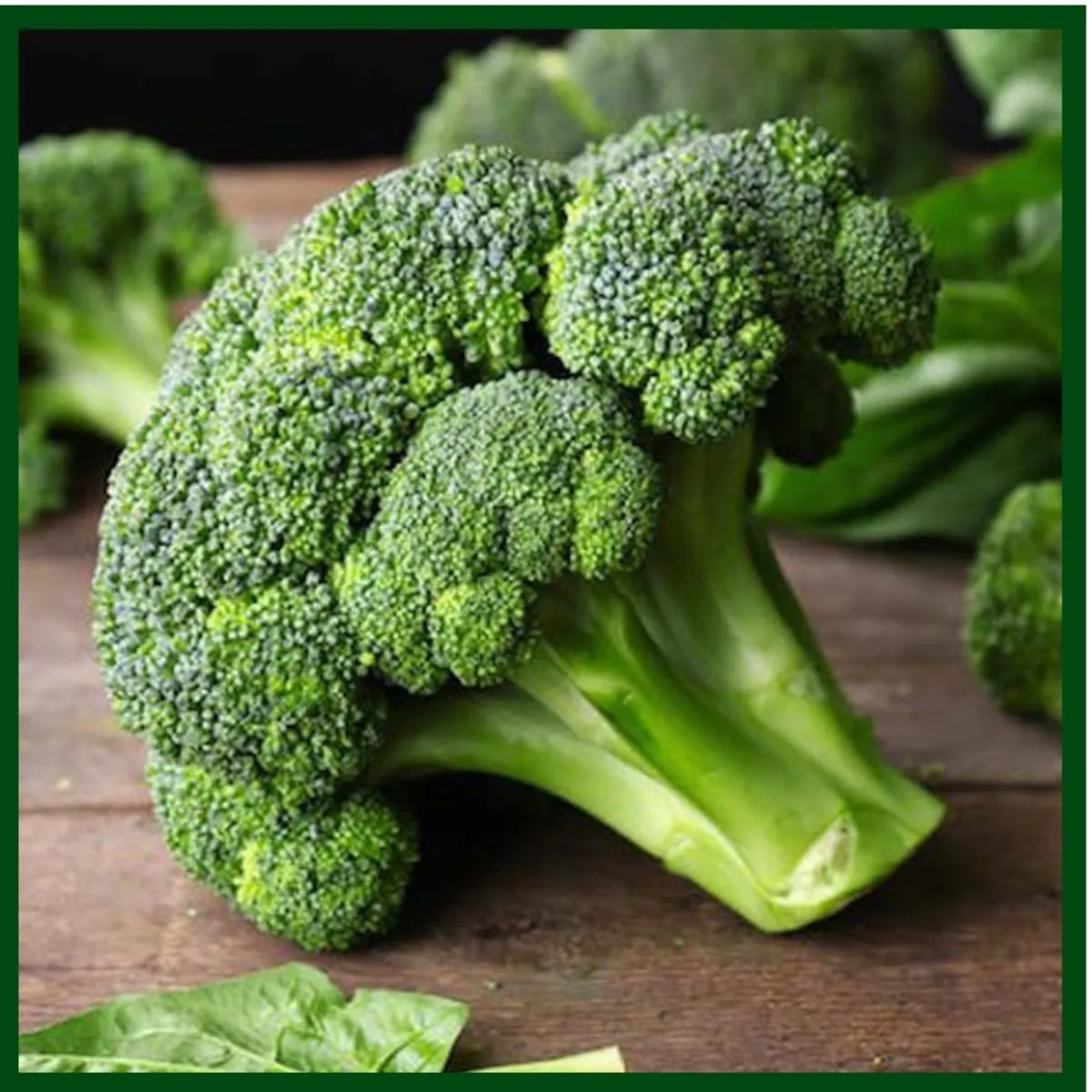
Broccoli F1 Hybrid Seeds
85.00৳
Description
Broccoli – ব্রোকলি – F1 Hybrid Seeds – MGS1025
Price: 85 Taka/ packet
Quantity: 30 – 50 seeds
Germination Rate (Min): 80%
Physical Purity (Min): 98%
Genetic Purity (Min): 98%
Germination Temperature (in degrees Celsius): Broccoli seeds germinate best at temperatures between 4°C and 30°C. However, the optimal range for faster and more uniform germination is 20°C to 25°C. Some sources suggest that germination can occur as low as 4°C, but it is slower, while temperatures around 24°C to 27°C significantly speed up the process.
Germination Time (in Days) of Seeds: Broccoli seeds typically take 5 to 10 days to germinate, depending on soil temperature, moisture, and seed quality. At optimal temperatures (20°C–25°C), germination often occurs within 5–7 days.
Plant Height, Span, and Seed Sowing Depth
- Height: Mature broccoli plants grow to 18–36 inches (45–90 cm) tall, depending on the variety and growing conditions.
- Span (Width): The plant spreads about 12–24 inches (30–60 cm) wide.
- Seed Sowing Depth: Seeds should be sown ¼ to ½ inch (0.6–1.3 cm) deep in the soil.
Plant Spacing: Broccoli plants should be spaced 12–24 inches (1–2 feet or 30–60 cm) apart to allow for adequate air circulation and growth.
Row Spacing: Rows should be spaced 18–36 inches (1.5–3 feet or 45–90 cm) apart, with 24 inches (60 cm) being the most common recommendation for optimal growth.
Support Requirement: Broccoli typically does not require a trellis or physical support, as it grows upright with a sturdy stem. However, taller varieties (over 30 inches) or plants in windy areas may benefit from staking with a cane to prevent toppling.
Seed to Harvest Time: Broccoli takes 60–100 days (approximately 2–3.5 months) from seed to harvest, depending on the variety and growing conditions. Faster-maturing varieties can be ready in as little as 50–60 days, while slower ones may take up to 100 days.
Seed to Bloom Time: Broccoli is harvested before it blooms, as the edible part is the unopened flower head. If left unharvested, blooming (yellow flowers) typically occurs 10–20 days after the head reaches maturity, roughly 70–120 days (2.5–4 months) from seed sowing, depending on temperature and variety.
Pot Size/Container Size/Bed Size:
- Pot Size: A container should be at least 12–18 inches (30–45 cm) wide and deep to accommodate the root system and mature plant size.
- Bed Size: In a garden bed, allocate about 1–2 square feet (144–288 square inches) per plant for healthy growth.
Soil Type:
- Soil Type: Broccoli thrives in well-drained, fertile, loamy soil rich in organic matter. It prefers a soil texture ranging from sandy loam to clay loam, with good moisture retention yet no waterlogging. Adding compost or aged manure enhances fertility and structure.
- Ideal pH Level: The optimal soil pH is 6.0–7.0 (slightly acidic to neutral), as this range supports nutrient availability and discourages diseases like clubroot.
Daily Sunlight Requirement:
- Daily Sunlight: Broccoli requires 6–8 hours of direct sunlight per day for healthy growth. Insufficient light can result in leggy plants and poor head formation.
- Light for Germination: Seeds do not require light to germinate (they are dark germinators), but once sprouted, seedlings need bright, indirect light or grow lights for 12–16 hours daily indoors.
Watering Requirement:
- General Requirement: Broccoli needs 1–1.5 inches (2.5–3.8 cm or approximately 2.5–3.8 liters per square meter) of water per week.
- Watering Intervals:
- Seedlings (up to 6 inches): Water lightly every 2–3 days (0.5–1 liter per plant), keeping soil consistently moist but not soggy.
- Young Plants (6–12 inches): Water every 3–4 days (1–2 liters per plant), adjusting for weather.
- Mature Plants (over 12 inches): Water deeply every 4–5 days (2–3 liters per plant), especially during head formation.
- Avoid wetting the heads to prevent rot.
Essential Nutrients required for Healthy Growth of This Plant:
- Essential Nutrients:
- Nitrogen (N): 3–5% – Promotes leafy growth.
- Phosphorus (P): 2–4% – Supports root and head development.
- Potassium (K): 2–4% – Enhances overall vigor and disease resistance.
- Calcium: 0.5–1% – Prevents tip burn and hollow stems.
- Magnesium: 0.2–0.5% – Aids photosynthesis.
- Organic Fertilizers:
- Compost: Provides balanced N-P-K (approx. 1–1–1) and micronutrients.
- Aged Manure: Rich in nitrogen (2–3%) and potassium.
- Fish Emulsion: High in nitrogen (5–2–2) and trace elements.
- Bone Meal: High in phosphorus (3–15–0) and calcium.
- Wood Ash: Supplies potassium (0–0–5) and raises pH.
For a 12–18 inch pot:
- Compost: Apply 200–300 grams at planting, mixed into the soil. Reapply 100 grams every 4–6 weeks.
- Aged Manure: Use 100–150 grams at planting. Top-dress with 50 grams every 6 weeks.
- Fish Emulsion: Dilute 10 ml in 1 liter of water (approx. 10 grams), apply 1 liter per plant every 2 weeks.
- Bone Meal: Mix 20–30 grams into soil at planting. No repeat needed unless deficiency appears.
- Wood Ash: Sprinkle 10–15 grams at planting, repeat once mid-season if soil tests low in potassium.
- Interval: Every 2–6 weeks, depending on fertilizer type and plant growth stage.
Fertilizer Requirement:
- Fertilizer: Use a balanced N-P-K fertilizer like 10-10-10 or a high-nitrogen option like 15-5-10.
- Application Rate:
- Seedlings (up to 6 inches): Apply 5–10 grams per plant at transplanting (starter fertilizer).
- Young Plants (6–12 inches): Side-dress with 10–15 grams per plant 3 weeks after transplanting.
- Mature Plants (over 12 inches): Apply 15–20 grams per plant when heads begin forming.
- Frequency: Apply every 3–4 weeks, avoiding over-fertilization to prevent excessive leaf growth.
Companion Plants
- Dill, Chamomile, Cilantro: Attract beneficial insects.
- Lettuce, Spinach: Low-growing, non-competitive.
- Onions, Garlic: Repel pests.
- Marigolds: Deter nematodes and aphids. Avoid planting near tomatoes, peppers, or other brassicas (e.g., cabbage).
Broccoli’s Taste: Mildly sweet, slightly bitter, and earthy. Rating: 7/10 (freshly harvested is sweetest).
Leaf Taste : Slightly bitter, similar to kale or collards, with a robust flavor. Rating: 6/10 (cooking reduces bitterness).
Pest Types (Chemical and Organic Control)
- Pests:
- Cabbage Worms: Green caterpillars.
- Chemical: Bacillus thuringiensis (BT), Spinosad.
- Organic: Hand-pick, use row covers, neem oil.
- Aphids: Small sap-sucking insects.
- Chemical: Imidacloprid.
- Organic: Insecticidal soap, ladybugs.
- Flea Beetles: Tiny black beetles.
- Chemical: Pyrethrin.
- Organic: Diatomaceous earth, row covers.
- Cabbage Worms: Green caterpillars.
- Monitor plants regularly and apply controls early.
Disease Types (Chemical and Organic Control)
- Diseases:
- Clubroot: Soil-borne fungus causing root swelling.
- Chemical: None widely effective; focus on prevention.
- Organic: Raise soil pH with lime, rotate crops.
- Black Rot: Bacterial leaf spots.
- Chemical: Copper-based fungicides.
- Organic: Remove infected parts, improve air circulation.
- Downy Mildew: Fungal growth on leaves.
- Chemical: Mancozeb.
- Organic: Sulfur spray, avoid overhead watering.
- Clubroot: Soil-borne fungus causing root swelling.
- Crop rotation and sanitation are key preventatives.
Crop Maturity Identification:
- Florets are tight, compact, and dark green.
- Head size is 4–6 inches (10–15 cm) across.
- No yellow flowers are visible (indicates over-maturity). Cut the main head with a sharp knife, leaving 5–6 inches of stem.
Average Lifespan of This Plant
Broccoli is a biennial but grown as an annual, with a lifespan of 3–5 months from seed to harvest. After the main head is cut, side shoots extend its productive life by 1–2 months.
Nutritional Value(s)
Per 100 grams (raw):
- Calories: 34 kcal
- Protein: 3 g
- Fiber: 2.6 g
- Vitamin C: 89 mg (149% DV)
- Vitamin K: 102 µg (127% DV)
- Calcium: 47 mg
- Iron: 0.7 mg
- Potassium: 316 mg
Health Benefits
- Rich in Antioxidants: Vitamin C and beta-carotene reduce oxidative stress.
- Cancer Prevention: Sulforaphane may inhibit cancer cell growth.
- Heart Health: Fiber and potassium lower cholesterol and blood pressure.
- Bone Health: Calcium and vitamin K support strong bones.
- Digestive Health: High fiber promotes regularity.
Food Recipes













Reviews
There are no reviews yet.